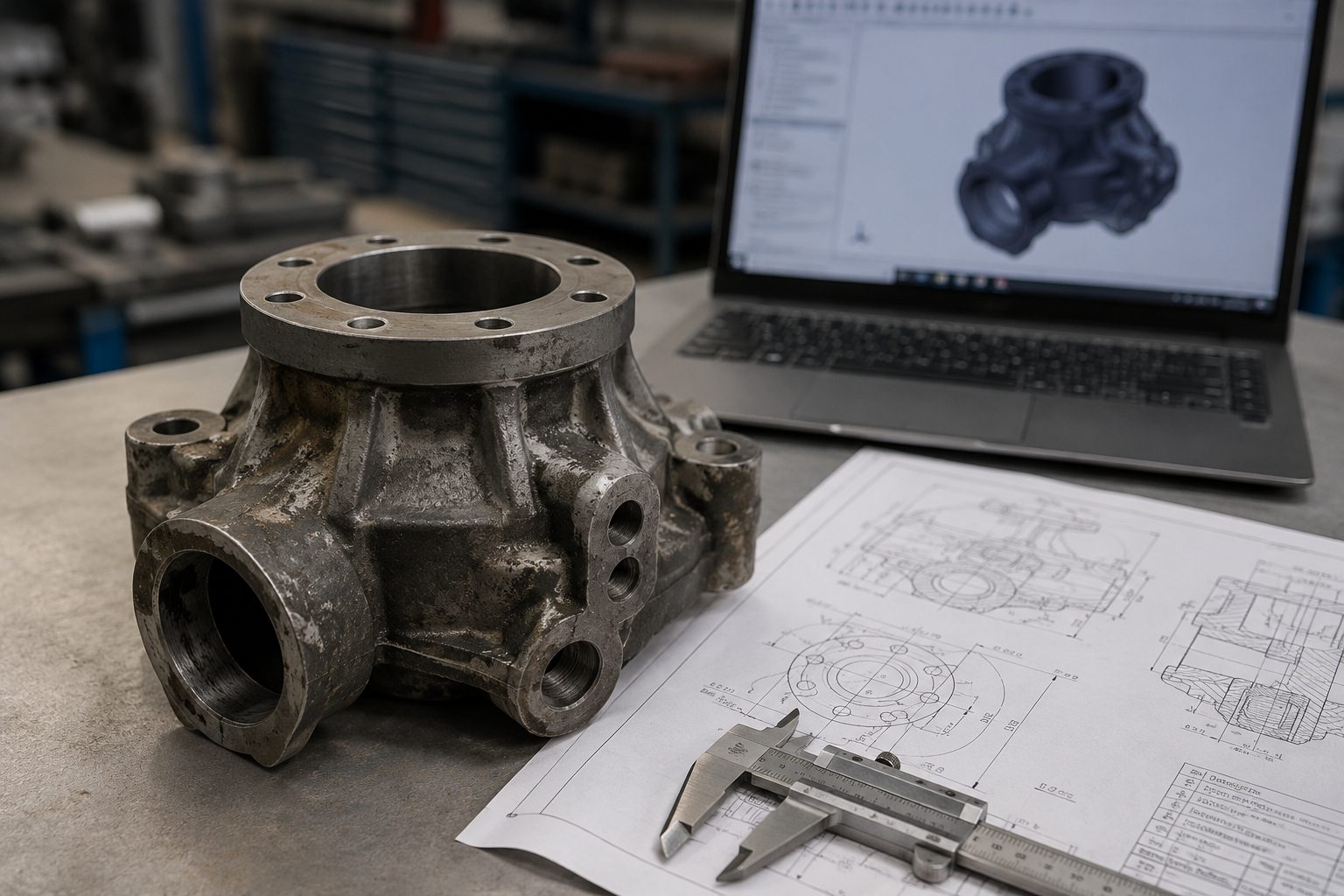
PART RECOVERY
Solutions

When spare parts are no longer available, you don't need a parts catalogue. You need a technical recovery process.

Today, most critical spare parts fail not because they can't be manufactured, but because the data is missing.

The supplier has disappeared. The drawing is gone. The material is unknown. The part is worn out. The asset is down anyway.

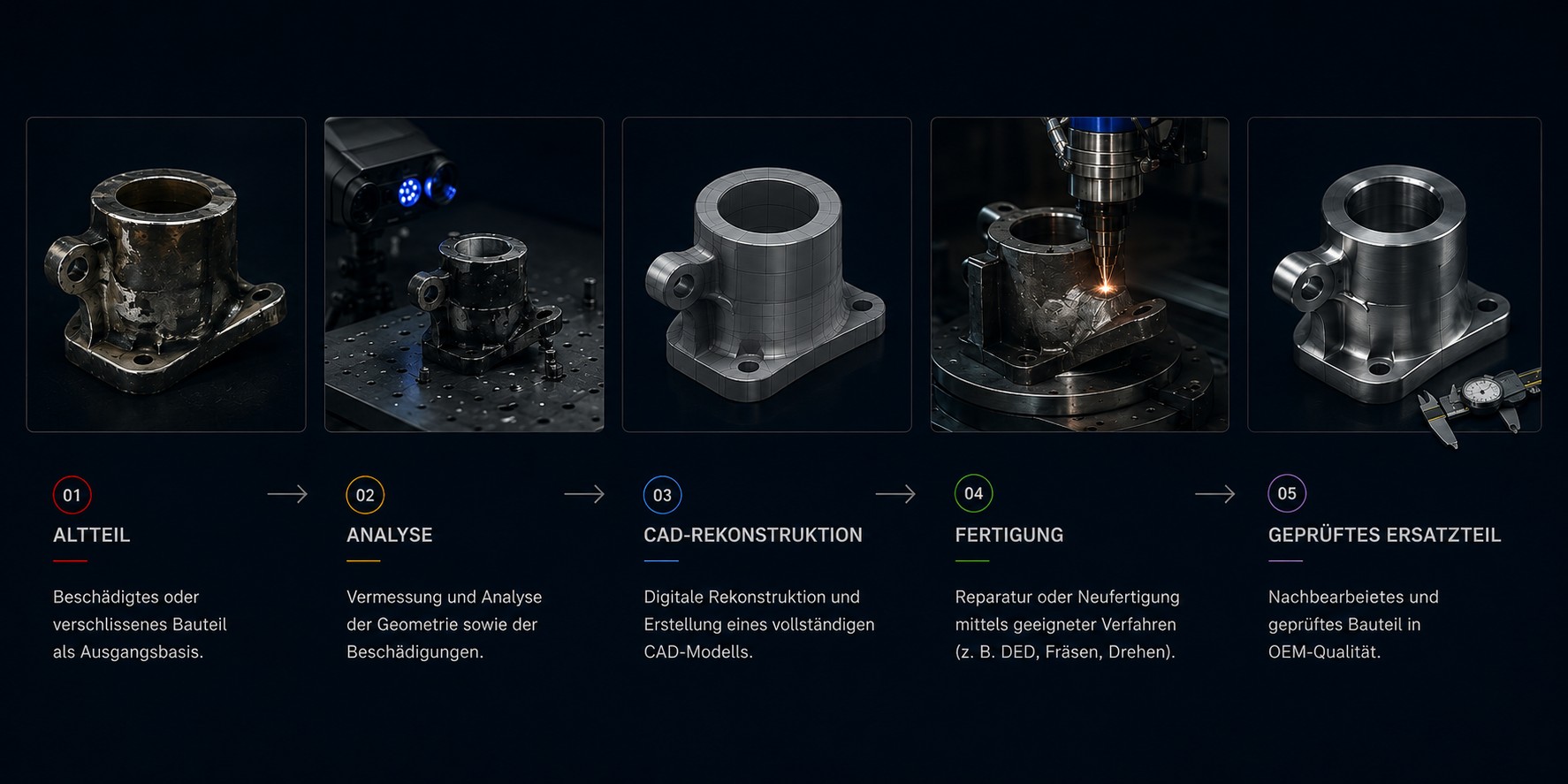
Part Recovery delivers a structured technical path: from the existing legacy part through analysis, reconstruction, manufacturing and inspection to a part that is fit for service again.

Not as a blind copy. Not as "we 3D-print everything". But as a reliable recovery process for industrial parts.
Typical starting points

When recovery becomes the topic

Spare part no longer available

The original part is end-of-life, has extreme lead times or is no longer supported by the manufacturer. We assess whether the part can be reconstructed, repaired or replaced by a functionally equivalent solution.

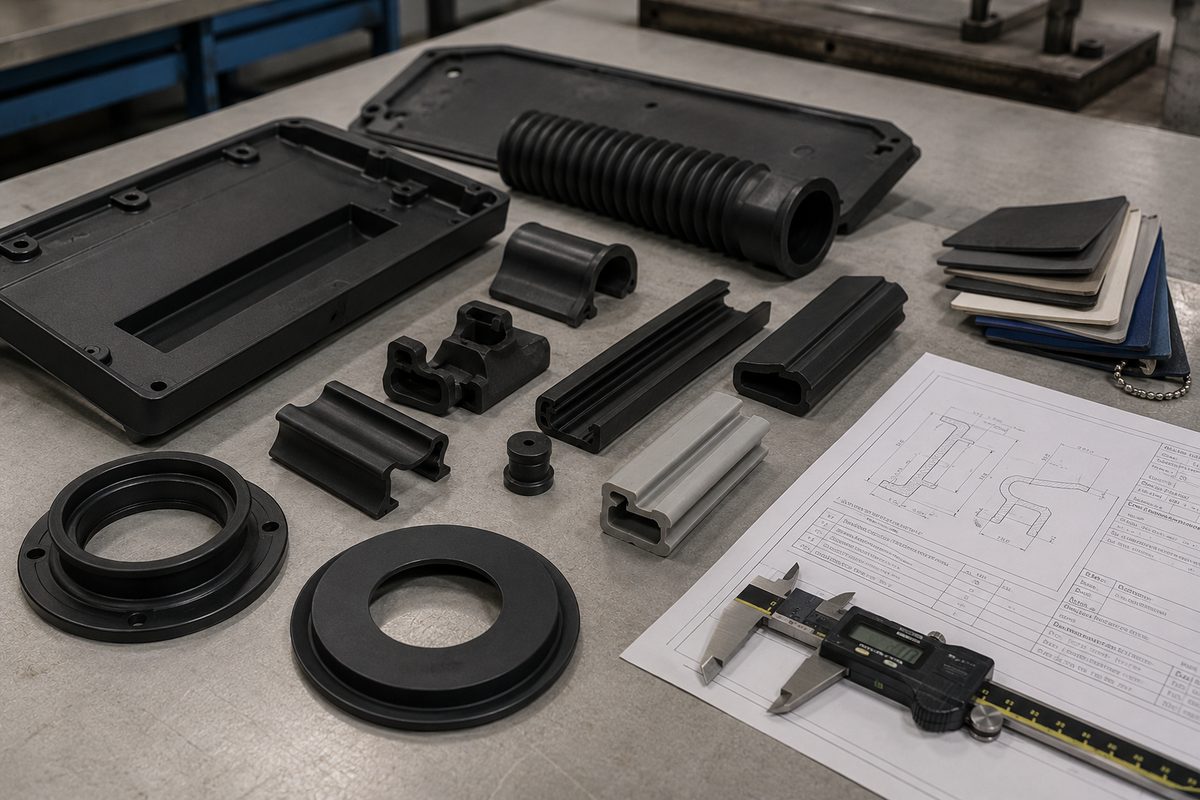
Housings · brackets · flanges · covers · guides · machine elements · older cast or welded parts · special parts from small series
Supplier insolvent or no longer reachable

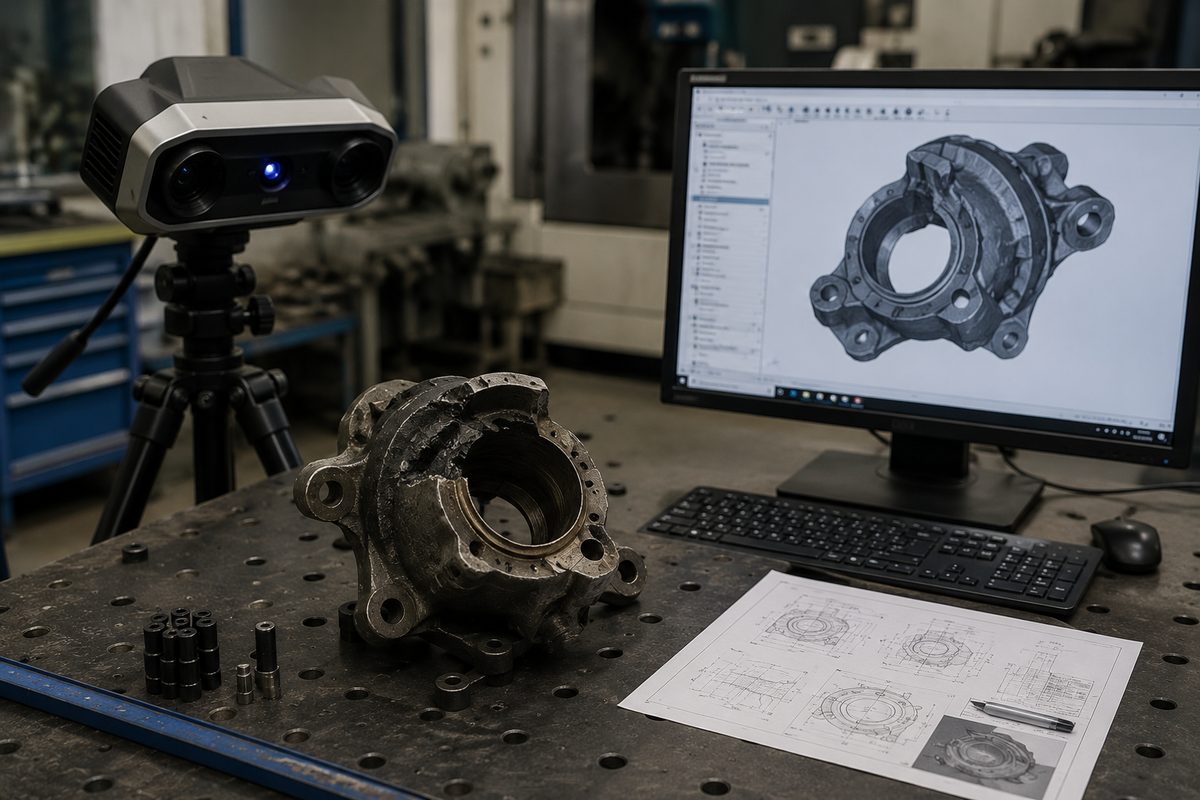
When the original manufacturer drops out, often not only parts are missing, but also drawings, material data and process knowledge. We start from the existing part.

Capture geometry · understand function · determine material · assess wear · derive manufacturing route · define inspection scope

The goal is not the perfect historical copy, but a technically responsible replacement.

Drawing missing

Many older assets run with parts that no longer have reliable documentation. Reverse engineering means: the real part is measured, technically interpreted and converted into usable data.

3D CAD model · technical drawing · manufacturing data · inspection features · change documentation · part dossier

Part worn out or damaged

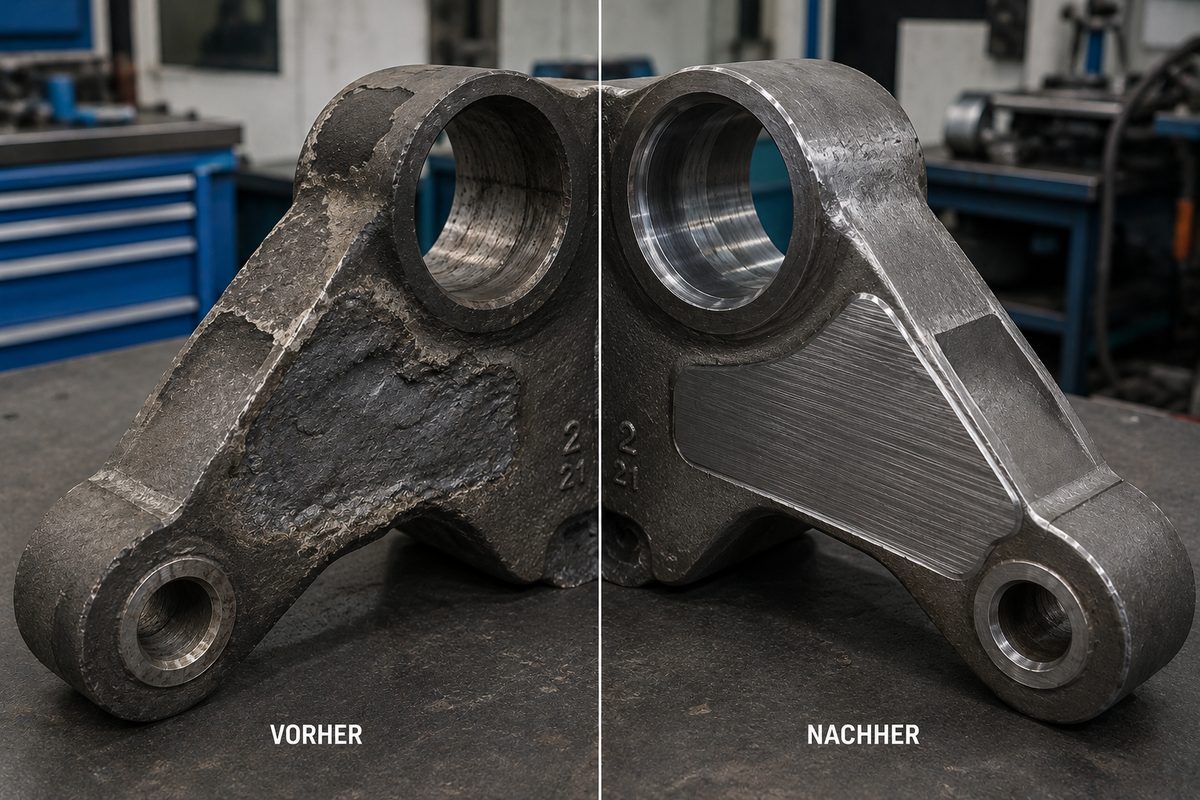
A worn-out part is rarely a clean template. That is exactly why scanning alone is not enough. We distinguish original geometry, wear pattern, defect, functional surface, installation area and permissible deviation.

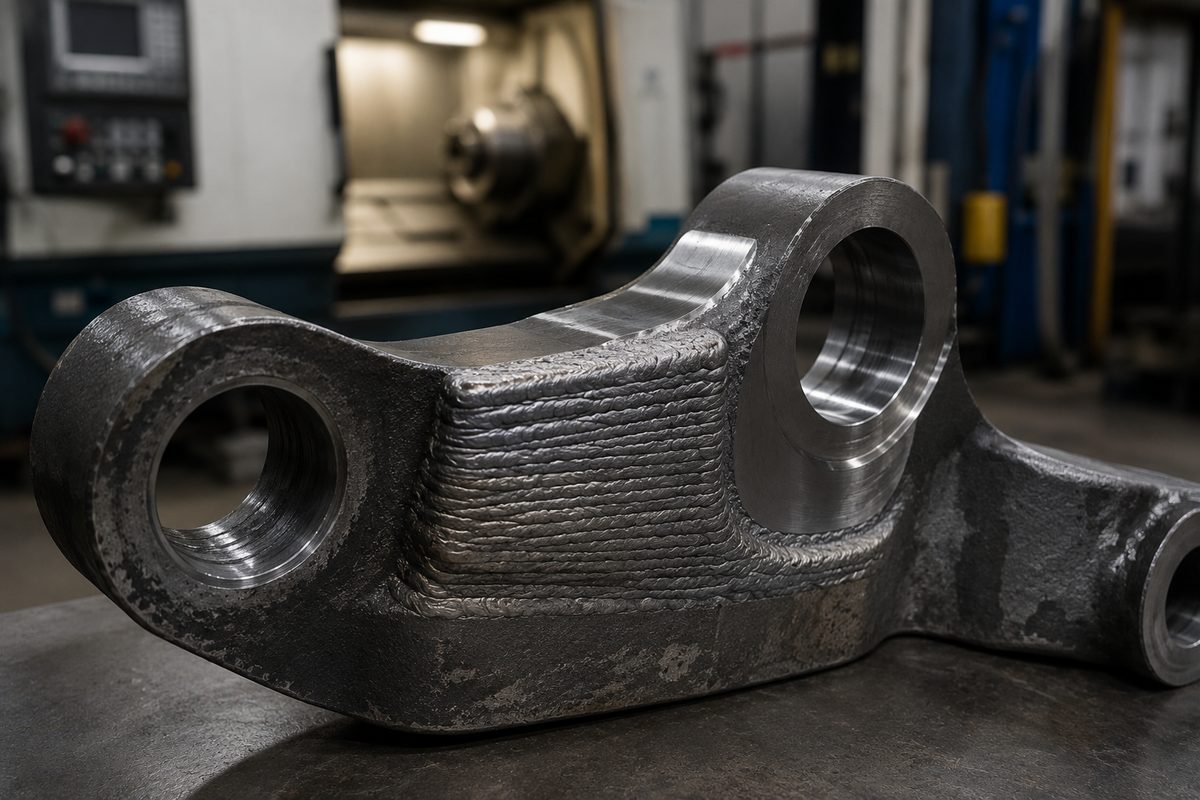
Then we decide whether repair, rebuild, reconstruction or replacement manufacturing makes sense.

Material unknown

For legacy parts the material data is often incomplete or wrong. We clarify, as far as technically required: base material, hardness, coating, microstructure, wear mechanism, temperature and medium contact — for polymers and elastomers also polymer base, hardness, ageing, fillers and function.

Only then is the replacement material defined.

Documentation or proof required

Not every spare part requires the same effort. That is why we work with three recovery levels.

Three levels

Recovery levels — from simple spare parts to regulated applications

Level 1

Basic Recovery

For simple spare parts with low documentation requirements.

Suitable for

Covers · brackets · simple plastic parts · non-safety-critical fixture parts · non-critical housings

Typical proof

Dimensional inspection · material declaration · simple manufacturing documentation

Level 2

Technical Recovery

For industrial functional parts with clear technical responsibility.

Suitable for

Metal parts with functional surfaces · wear parts · spare parts with mating and installation surfaces · parts with medium, temperature or load contact

Typical proof

3D measurement · CAD reconstruction · material analysis · defined inspection features · manufacturing documentation · inspection report

Level 3

Regulated Recovery

For parts with elevated documentation, quality or traceability requirements.

Suitable for

Rail · process industry · energy assets · infrastructure · defence · spare parts subject to documentation requirements

Typical proof

Recovery Check · inspection plan · traceability · material certificates · qualified manufacturing route · dimensional and inspection report · technical part dossier · obsolescence assessment

Our solution modules

Four routes back to an available spare part

The Part Recovery process

From legacy part to re-supplyable spare

  1. 01

    Enquiry

    You provide photos, existing drawings, quantity, installation context and known issues. If no data is available, the real part is often enough to start.

  2. 02

    Recovery Check

    We assess: can the part be reconstructed? Is repair more sensible than new manufacture? Which function is critical? Which proof is required? Which manufacturing route is realistic?

    The result is not a blanket commitment, but a technical first assessment.

  3. 03

    Technical solution path

    We define: reverse engineering, repair, replacement manufacturing, material substitution, additive manufacturing, classical manufacturing — or a combination.

    What matters is not the process, but the reliable result.

  4. 04

    Manufacturing

    Depending on the part, additive, welding, machining or polymer-engineering processes are used. Manufacturing follows from function, material, quantity, lead time and proof requirements.

  5. 05

    Inspection and documentation

    Depending on the recovery level we deliver dimensional inspection, material documentation, manufacturing documentation, inspection report, part dossier and re-supply data.

  6. 06

    Repeatability

    After a successful recovery the part is no longer an emergency. It can be carried as a technical dataset, qualified manufacturing route and re-supplyable spare part.

What we need from the customer

What helps for a fast first assessment

The more information available, the more reliable the first assessment. Missing data is not a blocker — that is exactly what the Recovery Check is for.

  • Photos of the part
  • Dimensions
  • Quantity
  • Application
  • Function
  • Damage pattern
  • Material data, if known
  • Old drawing, if available
  • Required lead time
  • Medium contact
  • Temperature range
  • Mechanical load
  • Existing inspection or release requirements
Clear limits

What we deliberately do not do

  • no blind copies of safety-critical parts
  • no technical commitments without a data basis
  • no "3D printing solves everything" promises
  • no unclear material substitution without assessment
  • no rubber-part promises without ageing and function checks
  • no re-manufacturing without clarification of legal and technical conditions
  • no parts for which the required inspection and release path is not viable
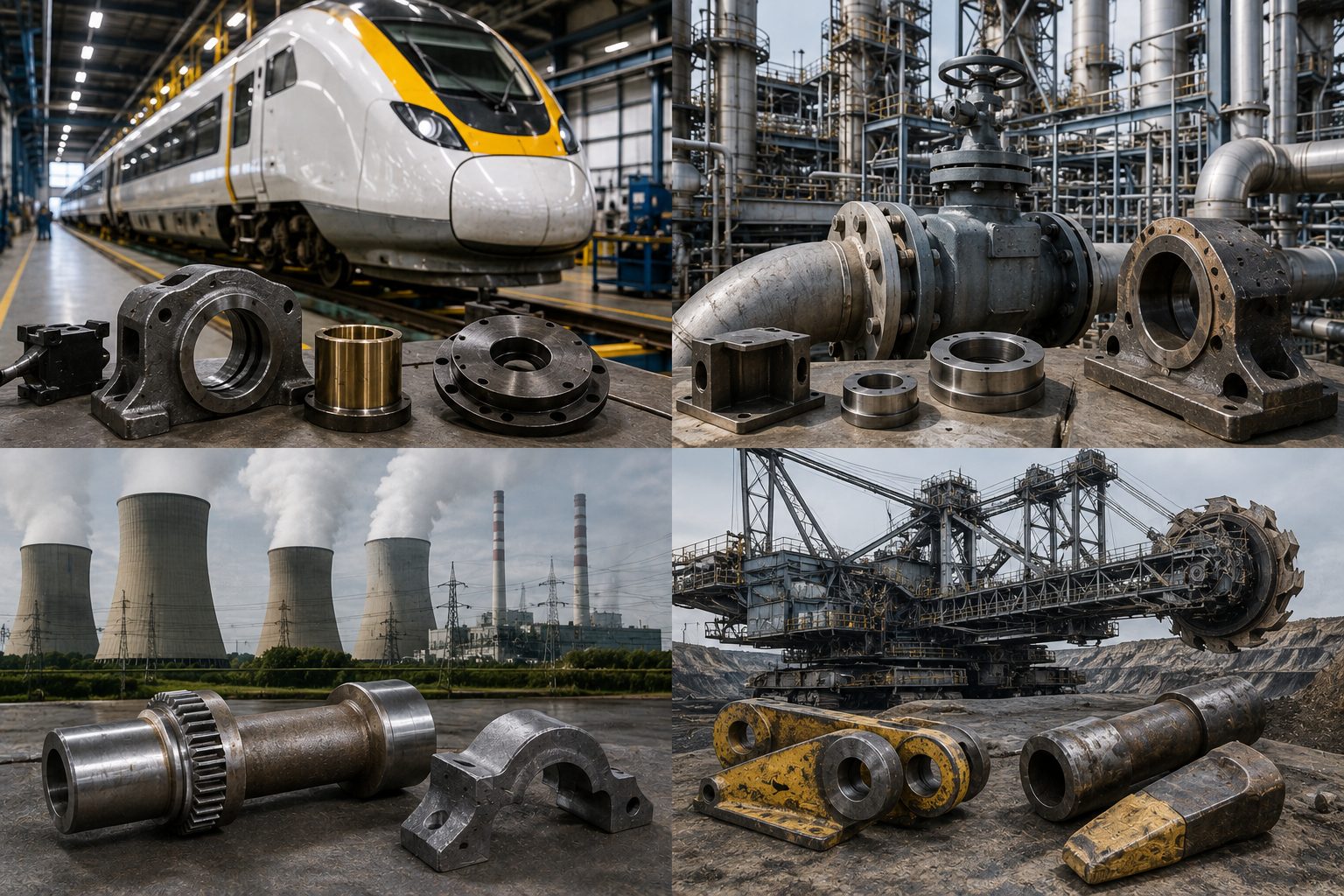
Typical industries

Where recovery is in particular demand

Rail

Obsolete spare parts, long lifecycles, missing suppliers, documentation-driven repair and spare-part processes.

Brackets · housings · covers · consoles · metal parts from older sub-assemblies · technical plastic parts

Learn more →

Process industry

Asset downtime caused by individual unavailable components, aggressive media, temperature, wear and long lead times.

Valve parts · flanges · housings · guides · brackets · worn functional surfaces

Learn more →

Energy

Long asset lifetimes, expensive downtime, older systems and critical spare-part availability.

Metal components · brackets · housings · special parts · wear-loaded parts

Learn more →

Infrastructure

Parts with long service life, limited documentation and high cost for classical re-procurement.

Connectors · brackets · covers · technical metal and plastic components · special parts

Learn more →

Defence

High requirements for traceability, documentation, material and qualified manufacturing.

Welded metal components · special brackets · housings · fixture parts · obsolete spares · repairable metal parts

Learn more →

Heavy Equipment

Robust machinery, harsh operating conditions, long lifetimes and often poor spare-part availability for older series.

Worn metal parts · guides · brackets · housings · bearing zones · repair parts

Learn more →