PART RECOVERY
Solution module

Polymer & Rubber Recovery

Replacing plastic and elastomer parts when the original material and supplier are gone
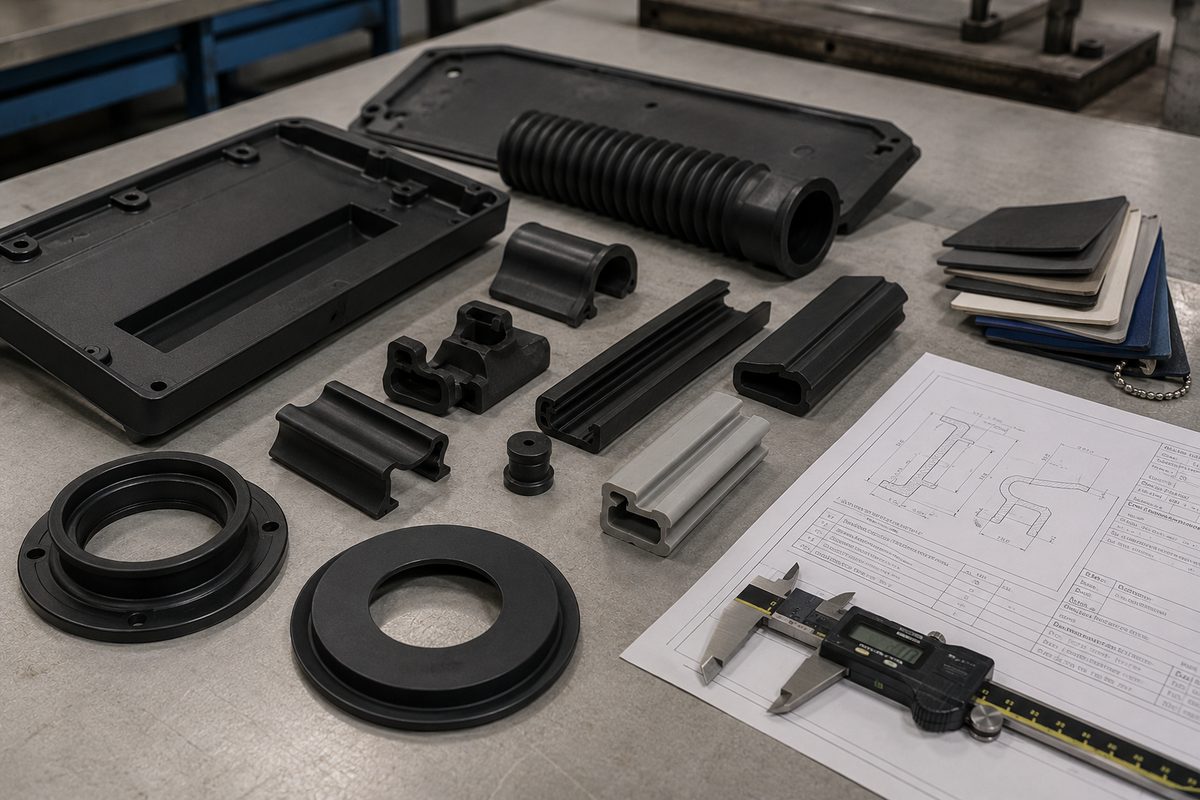
Polymer and rubber parts are critical because they often look unimpressive but carry significant functional load.

Geometry alone is not enough. Material, hardness, ageing, medium contact, temperature, friction and installation context decide.

That is why we treat plastic and elastomer parts not as simple copies, but as functional replacement solutions.

Suitable for

  • Technical plastic parts
  • Guides
  • Covers
  • Protective caps
  • Sealing profiles
  • Bearing and buffer elements
  • Elastomer parts
  • Rubber-metal parts
  • Thermoformed or shaped plastic parts
  • Small parts from older machines, vehicles or assets

Approach

  1. 01Clarify function
  2. 02Document installation context
  3. 03Analyse legacy material
  4. 04Assess wear and ageing
  5. 05Select replacement material
  6. 06Define manufacturing route
  7. 07Produce sample part
  8. 08Check fit and function

Possible manufacturing routes

  • SLS for robust plastic parts
  • MSLA for precise samples and small technical parts
  • Vacuum casting for small series
  • CNC machining from semi-finished stock
  • Thermoforming over tooling
  • Tool or mould build for recurring demand
  • Substitute design if the original material cannot be reproduced sensibly

Result

  • functional replacement
  • documented material decision
  • sample or series part
  • reproducible manufacturing route
  • technical basis for later re-supply

Important for rubber parts

Rubber does not last forever and cannot be "rebuilt" arbitrarily.

For elastomers it is a functional decision:

  • same function
  • suitable material
  • matching hardness
  • sufficient medium resistance
  • realistic service life
  • economical manufacturing route

Clear limit

We do not promise a miracle copy of old rubber parts. When an elastomer has aged, become brittle or chemically changed, the replacement must be re-assessed technically.